 DE
DE EN
EN

Knowledge about Superbikes
Tips and tricks on the topic of superbikes
What attachments do you need for a Supermoto conversion?
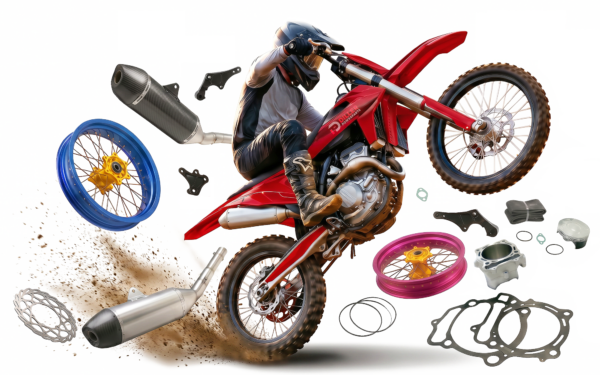
For a Supermoto conversion, you need the following attachments in addition to the rims.
We have linked the products for you here:
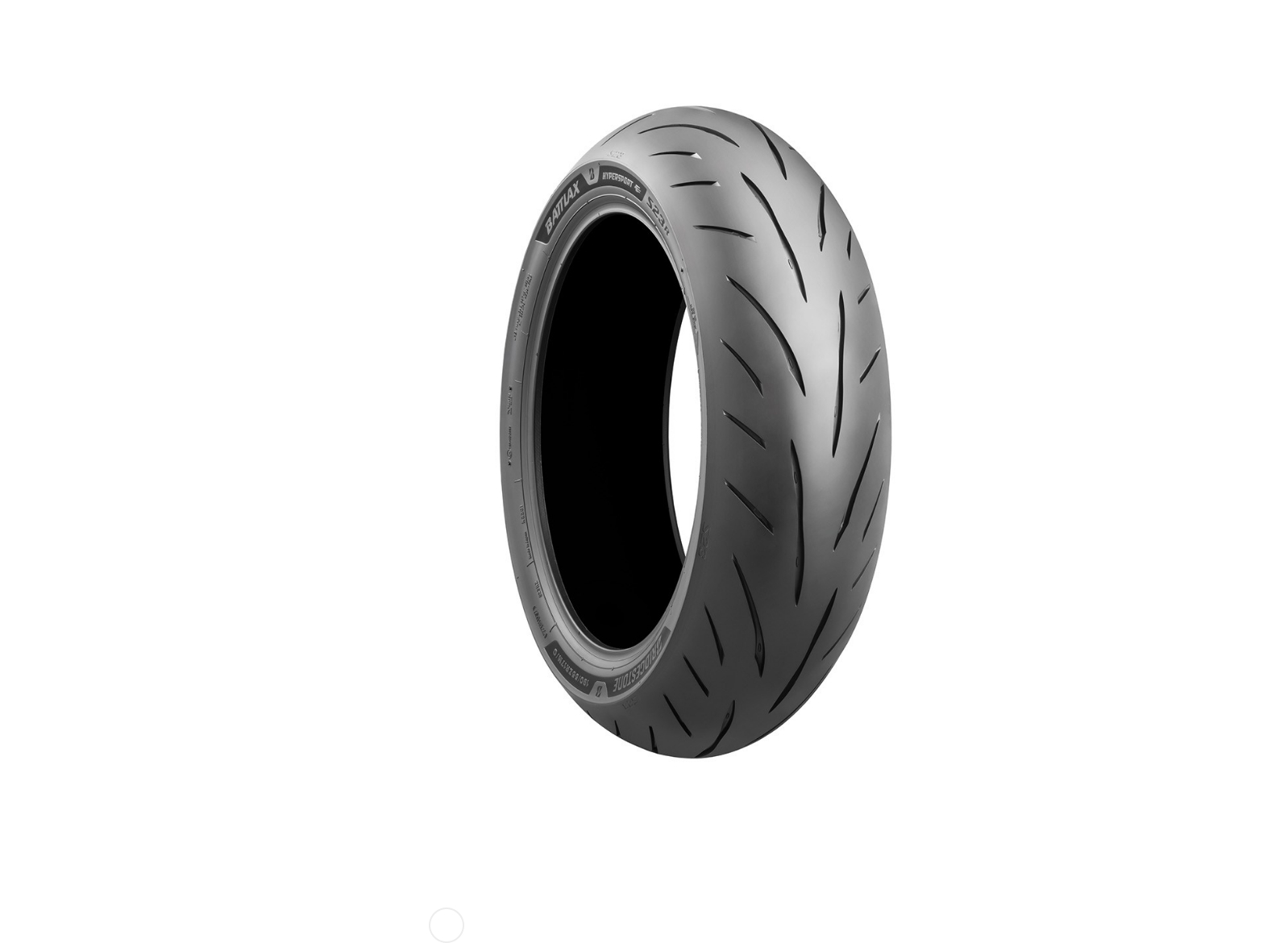
- Tires
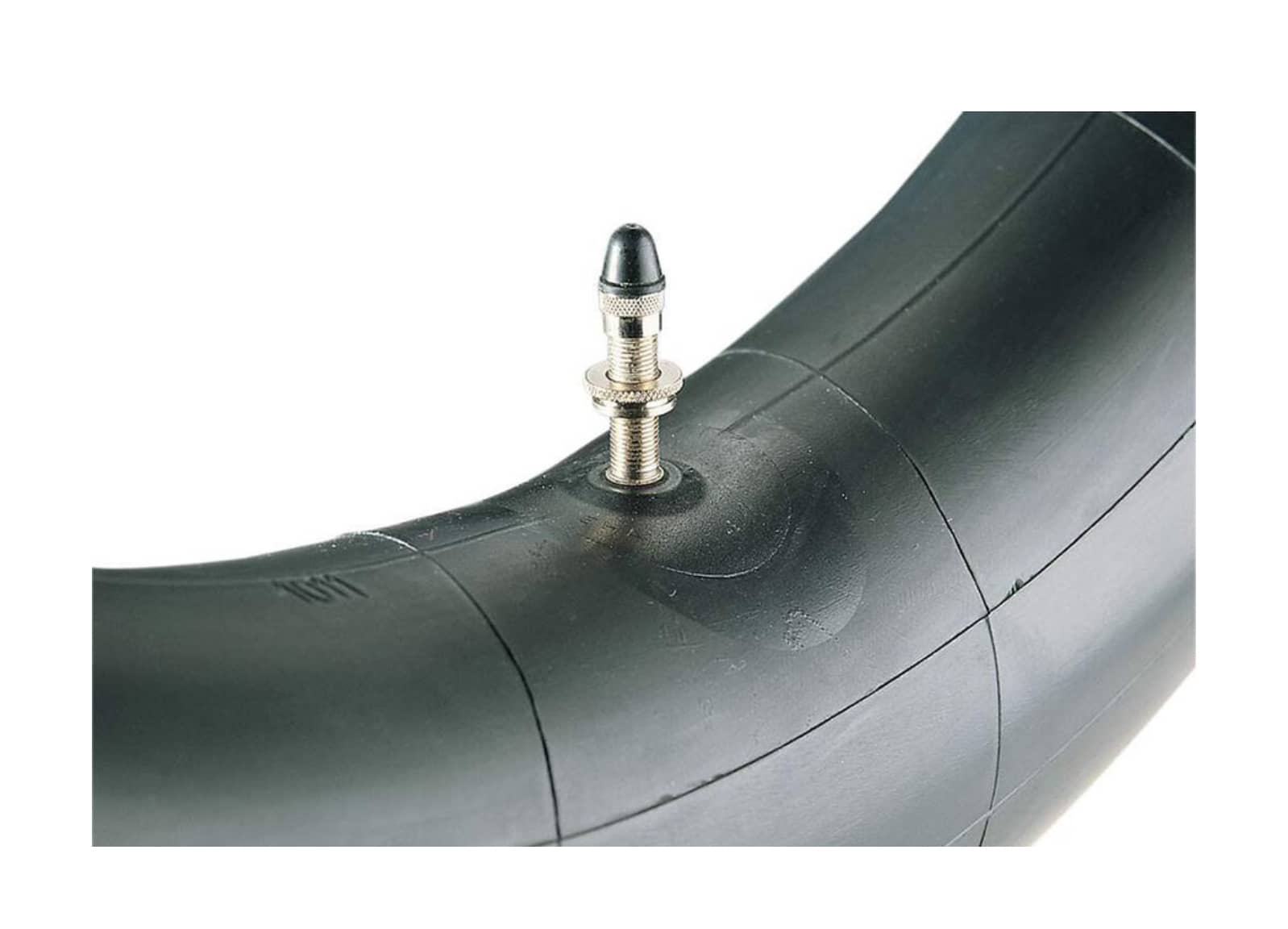
- Tubes
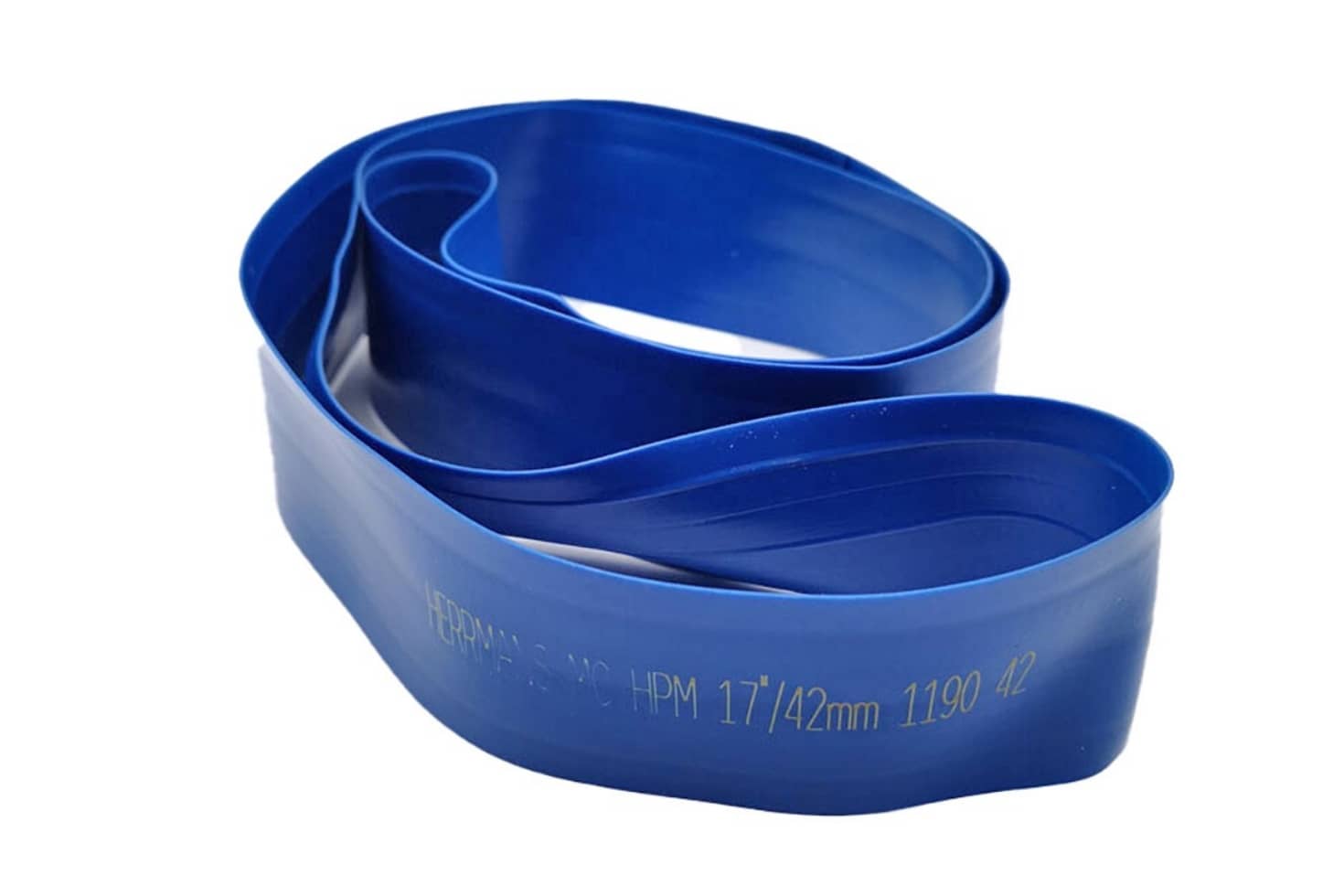
- Rim tapes
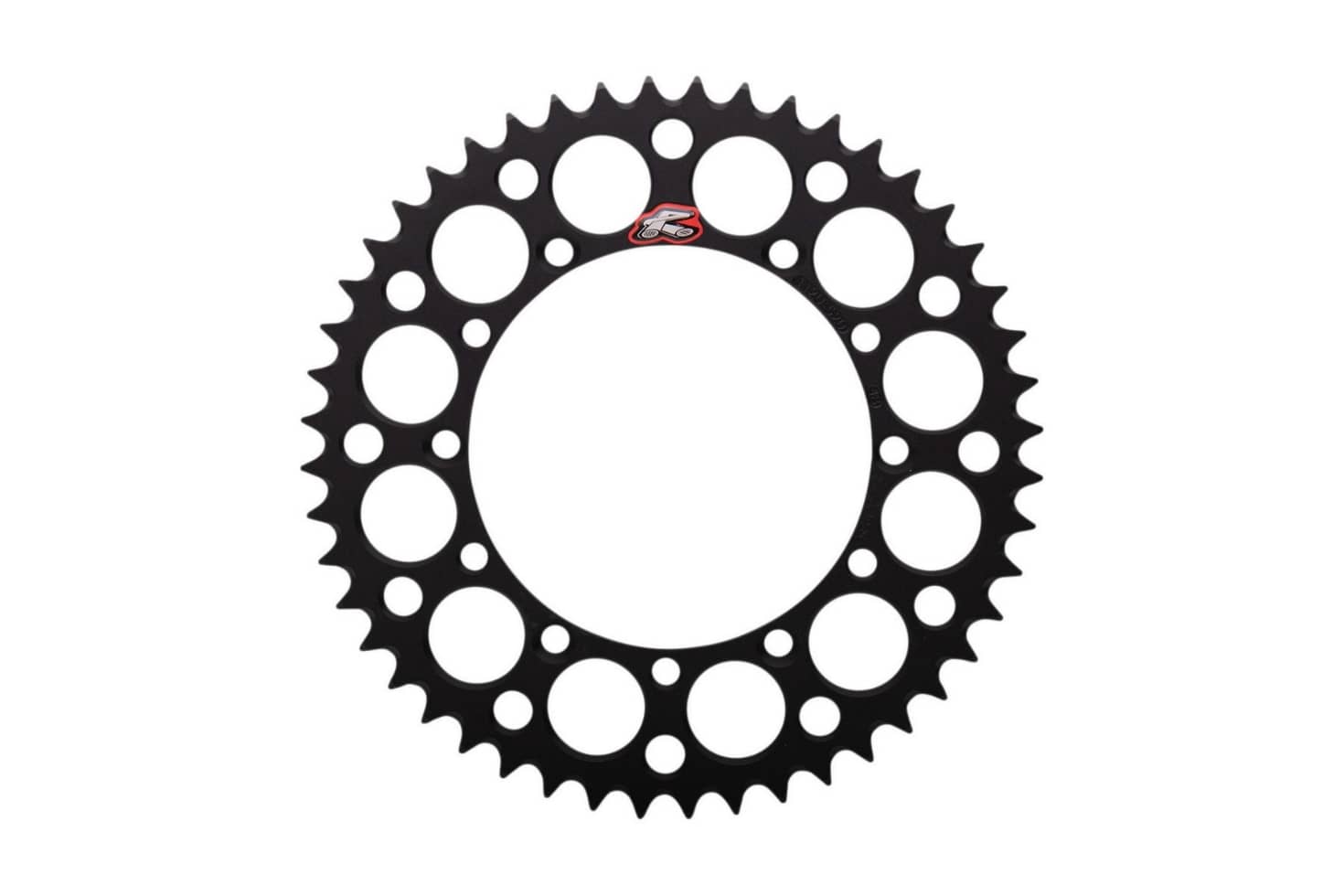
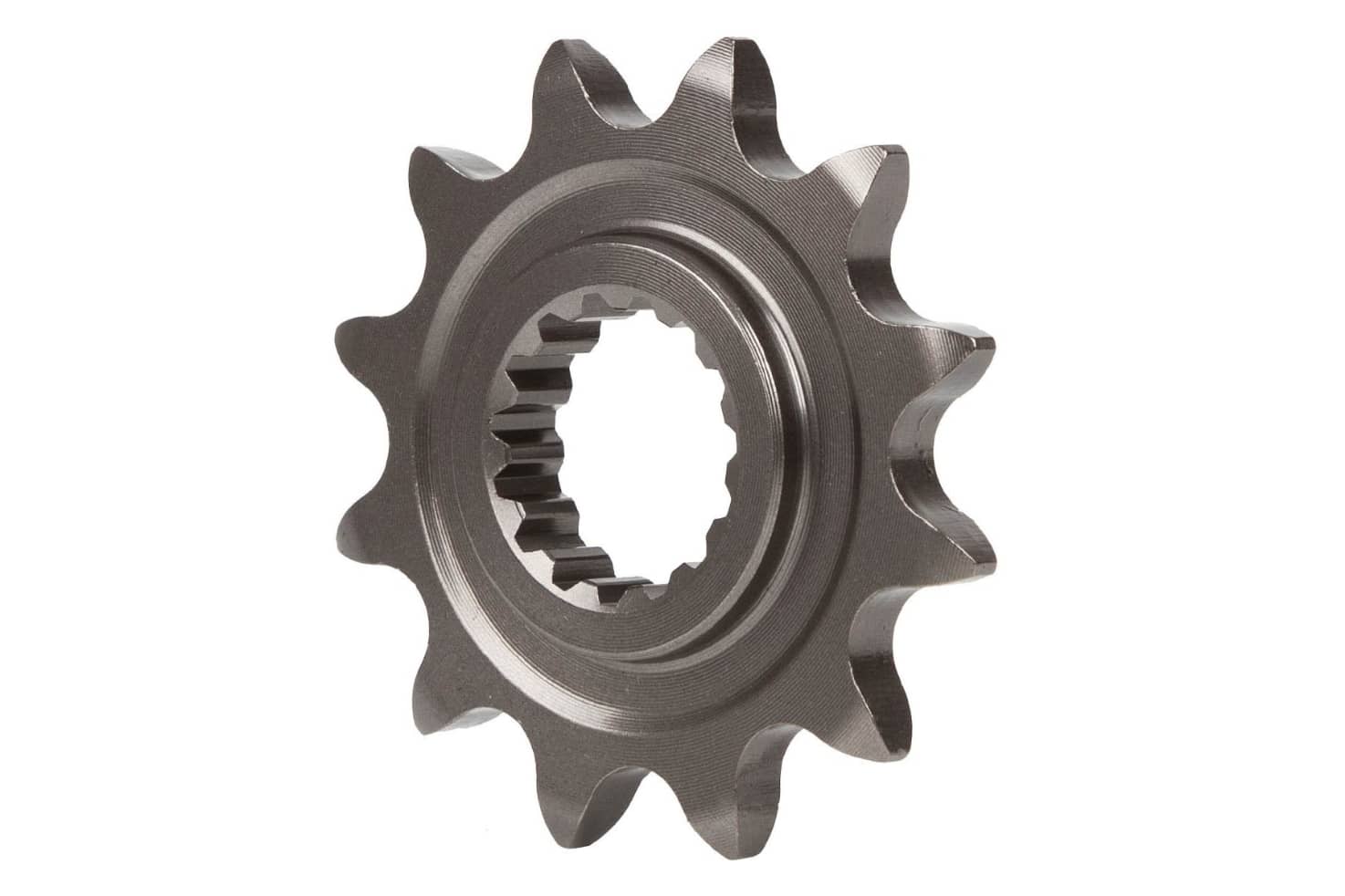
- Sprocket with suitable gearing
- Drive sprocket with suitable gearing
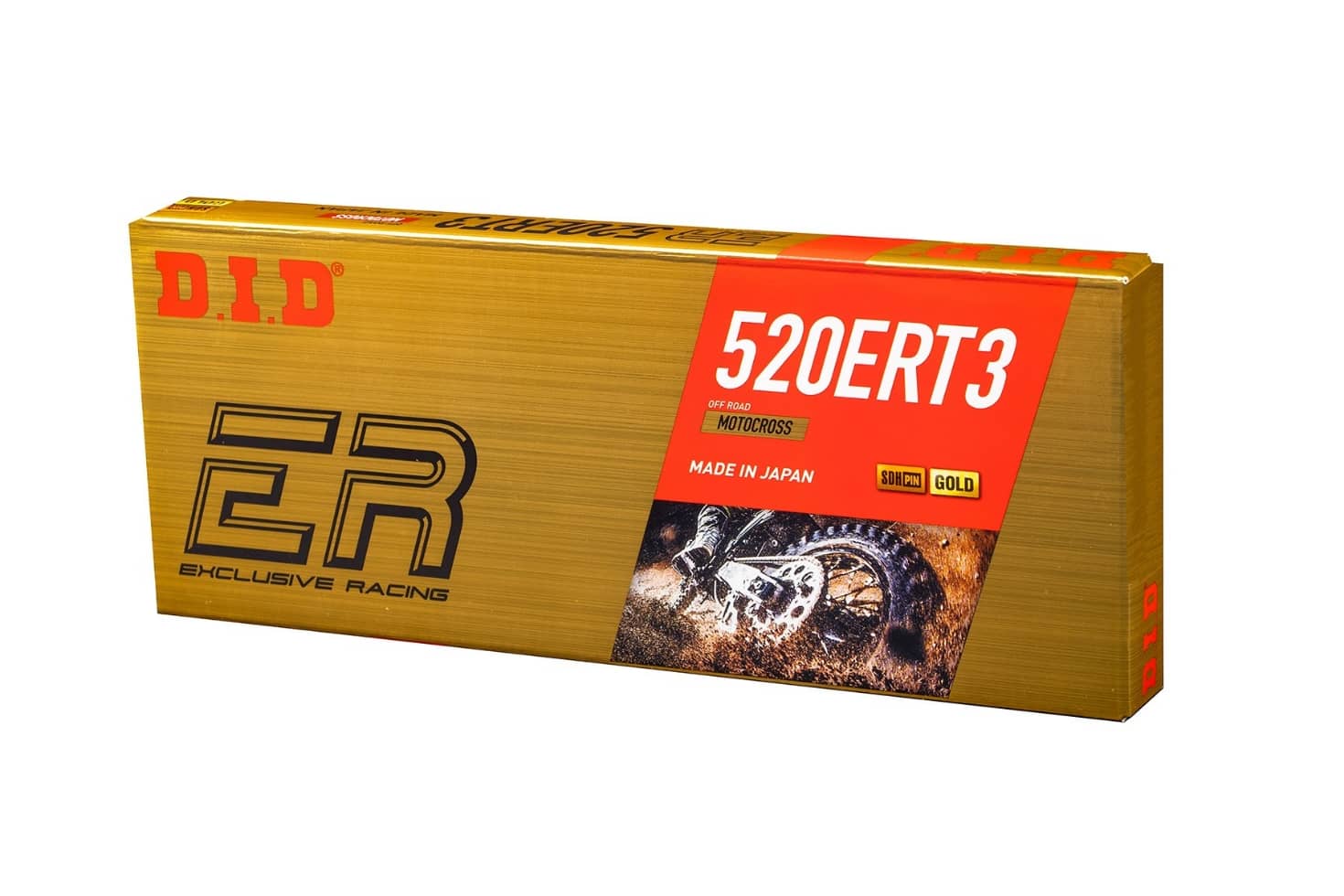
- Chain
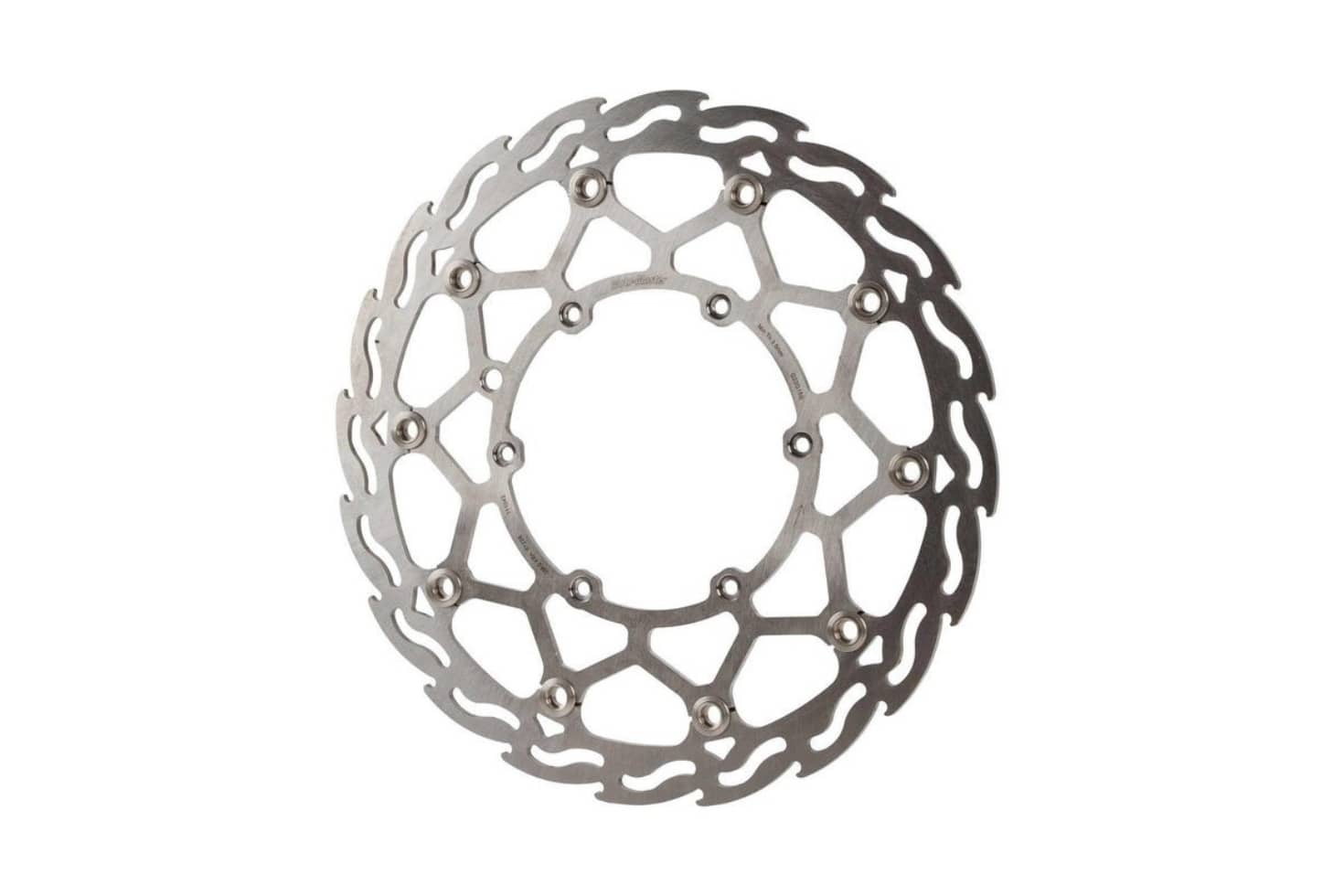
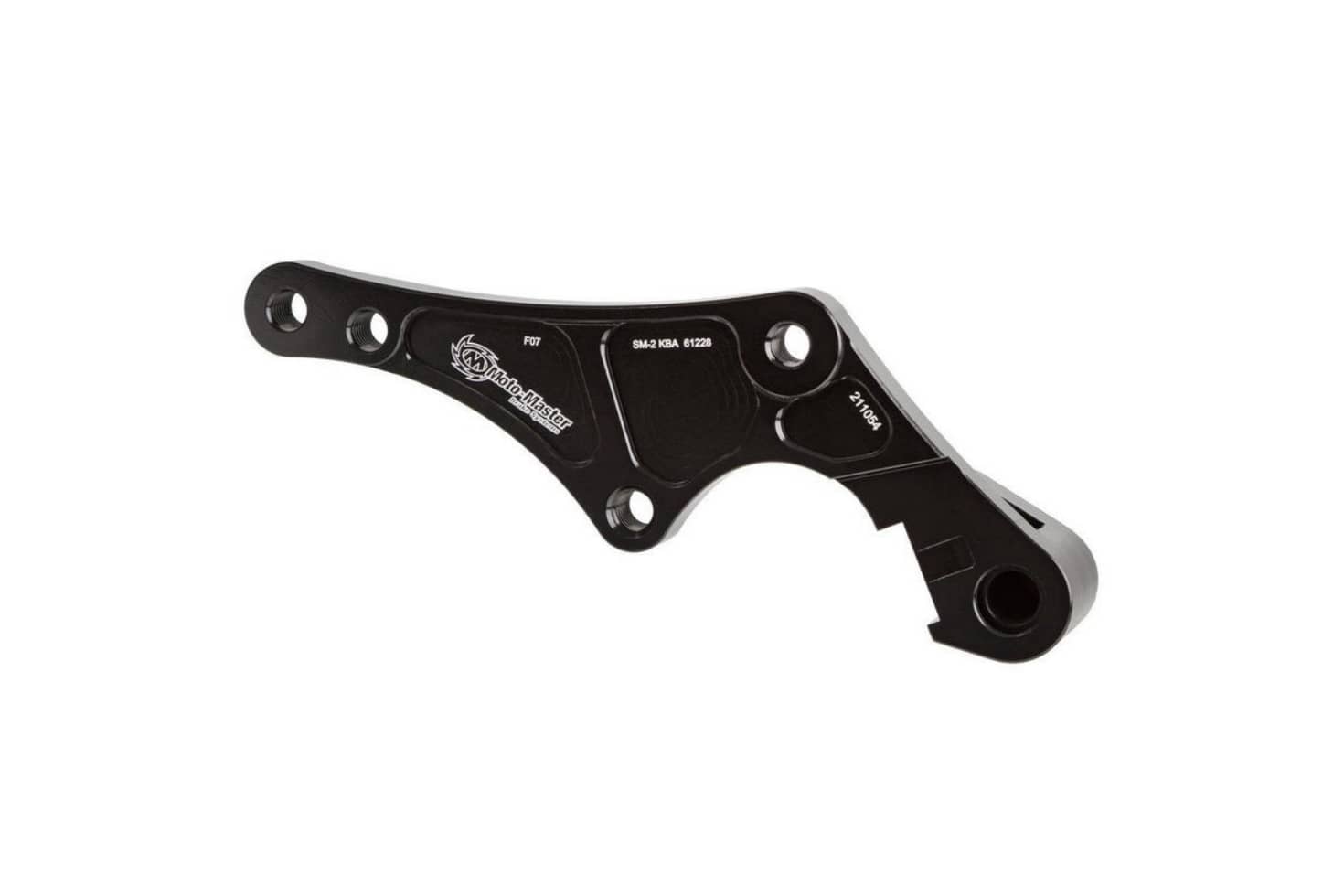
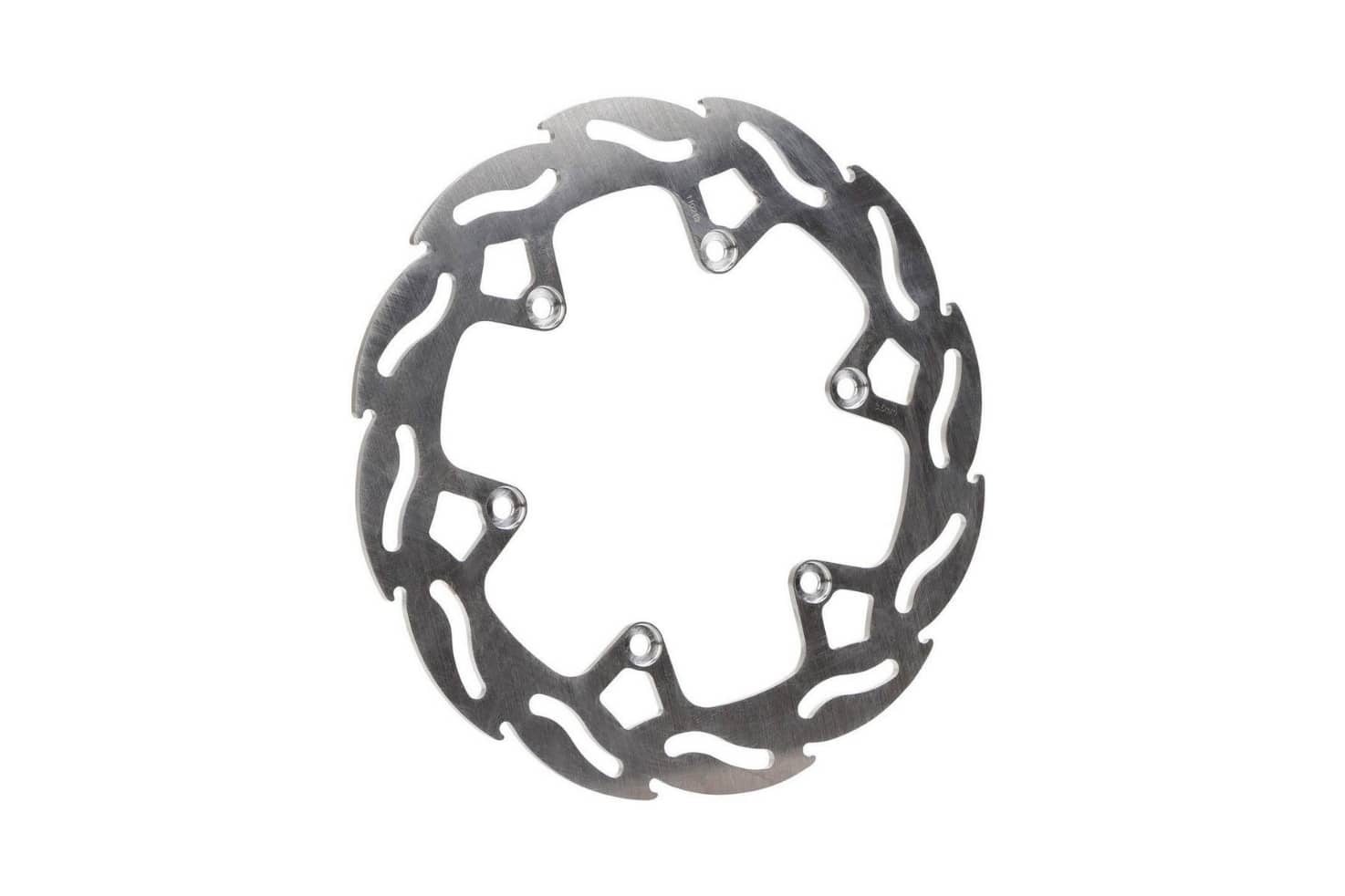
- Front brake disc 320mm with suitable adapter or complete brake system
- Rear brake disc
Which brake system is right for your Supermoto conversion?
The question of the ideal brake is one of the most important topics in Supermoto conversion. And as is often the case: the right choice depends heavily on how you want to use your motorcycle.
To explain. The original enduro brake is only conditionally suitable for the road. Standardly, with its 260mm brake disc, it is only designed for off-road use – not for high speed and hard deceleration on asphalt. The braking power on the road is therefore too low.
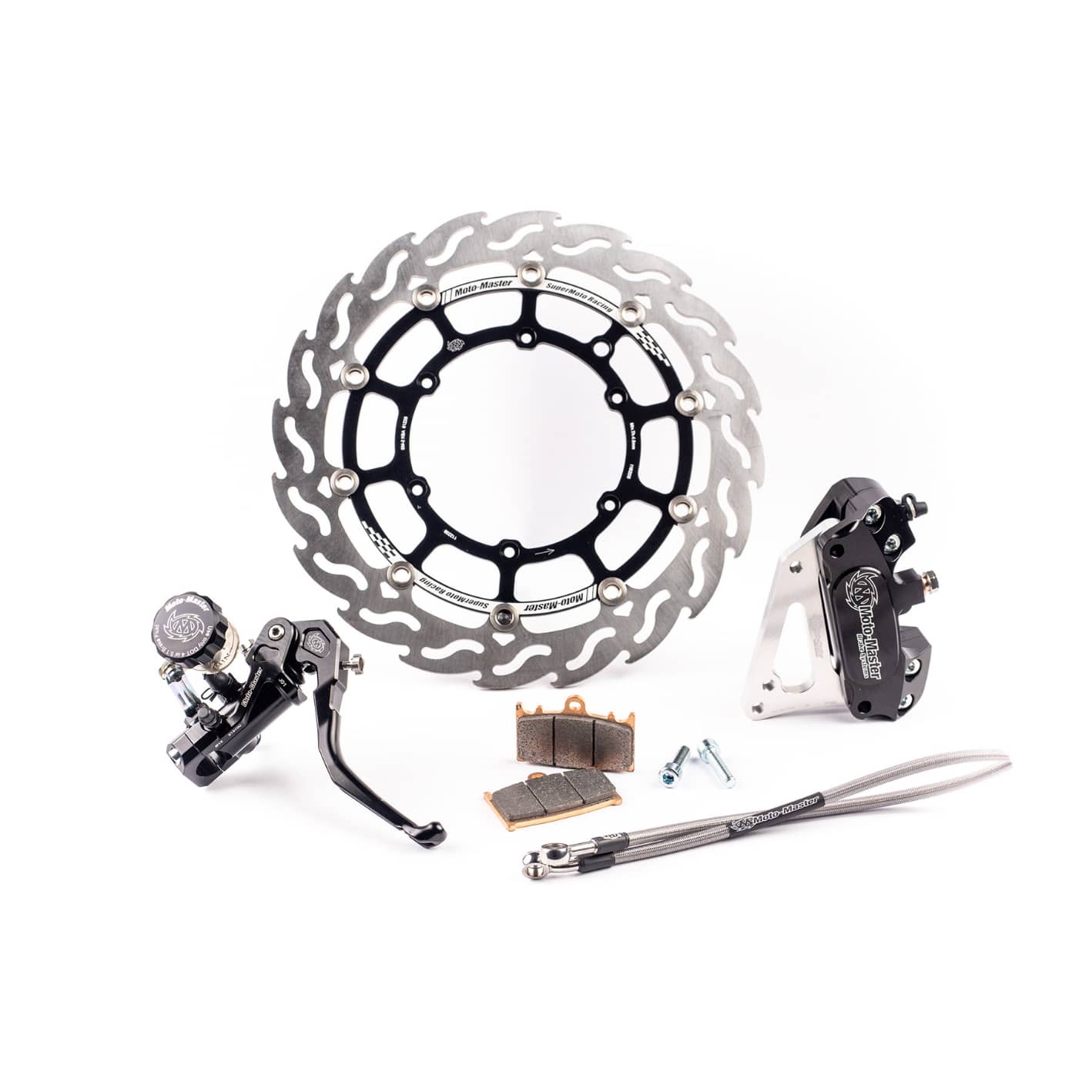
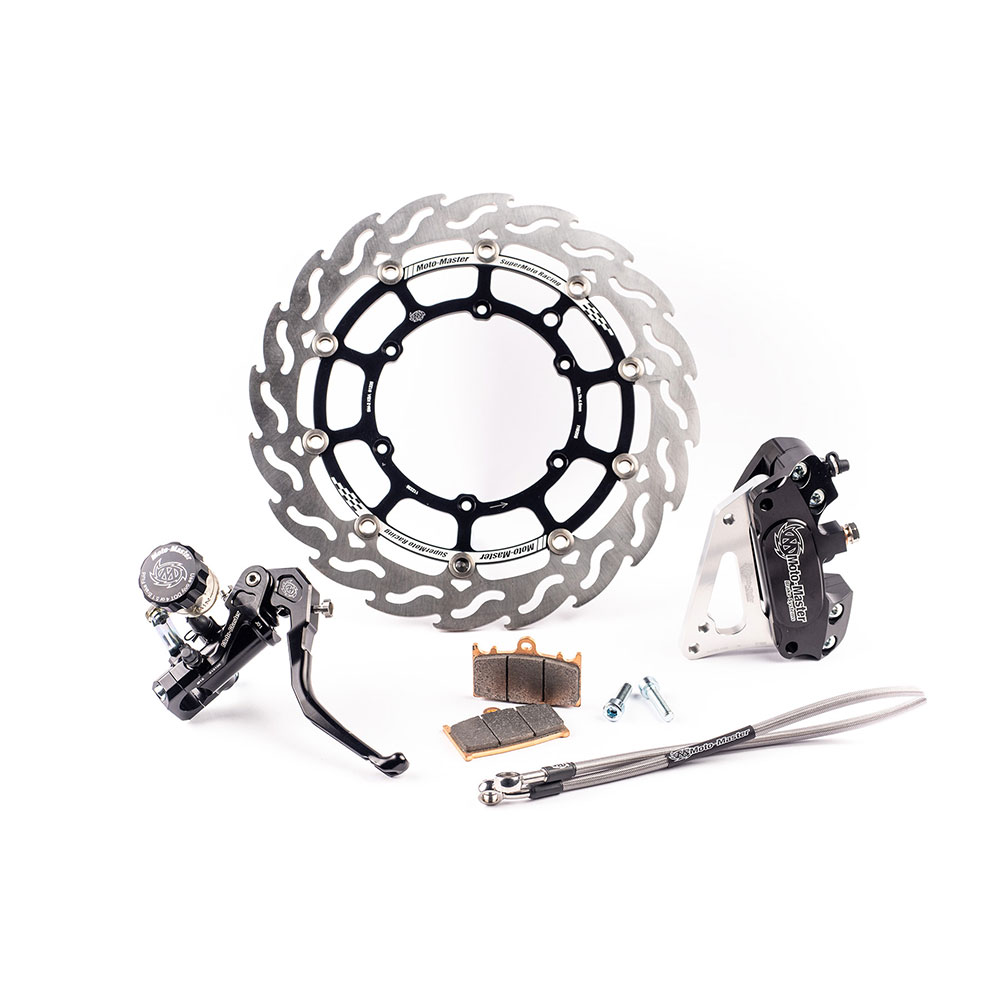
There are 2 common options to remedy this. A 320mm brake disc with adapter or a complete racing kit.
What you should know:
- If you only ride occasionally and at a leisurely pace, a 320mm disc with adapter for the original brake caliper is a solid, inexpensive solution. It noticeably improves braking performance – and represents the absolute minimum for road use.
- However, as soon as you ride sportily on the road more often or even want to get a taste of the racetrack, this combination quickly reaches its limits. The brake pump and brake caliper are simply not designed for the demands of Supermoto riding. You need a complete racing kit.
Our assessment:
If you really want to ride your Supermoto seriously, you should invest directly in a complete Moto-Master Racing Kit. This will give you optimal braking performance – reliable, stable and safe, even under extreme loads. And on top of that, you get a modern racing look included.
Important note on the entry-level variant:
If you initially opt for the combination of 320mm brake disc and adapter, you should bear in mind that these parts are not compatible with a later racing kit. Both the brake disc and the adapter are replaced by other components in the complete system. So you would be investing twice.
What is the best rim width for Supermoto?
For the Supermoto conversion of your enduro, you need 17-inch rims – that’s the standard. The correct rim width is particularly important so that nothing rubs and you get optimal handling.
Front wheel (standard size):
- 3.50×17 inches – with 120/70-17 tires
Rear wheel (common sizes):
- 4.50×17 → with 150/60-17 tires – lighter, more agile
- 5.00×17 → with 160/60-17 tires – more grip, higher stability
Our recommendation for most conversions:
- Front: 3.50×17
- Rear: 5.00×17 with 160/60-17 tires
This gives you optimal performance when cornering and doing stunts (e.g., wheelies) and you experience the perfect Supermoto and stunt riding feeling.
Which Supermoto Tire is Best?
Choosing the right tire isn’t an exact science. It heavily depends on how you ride, what bike you have, and what you use it for – whether it’s country roads, tight corners, wheelies, or stunts. And, of course, your personal feel for the tire matters in the end. Here’s a compact overview of popular Supermoto tires often ridden in the scene – including realistic assessments of grip, mileage, handling, and comfort.
Tire Overview:
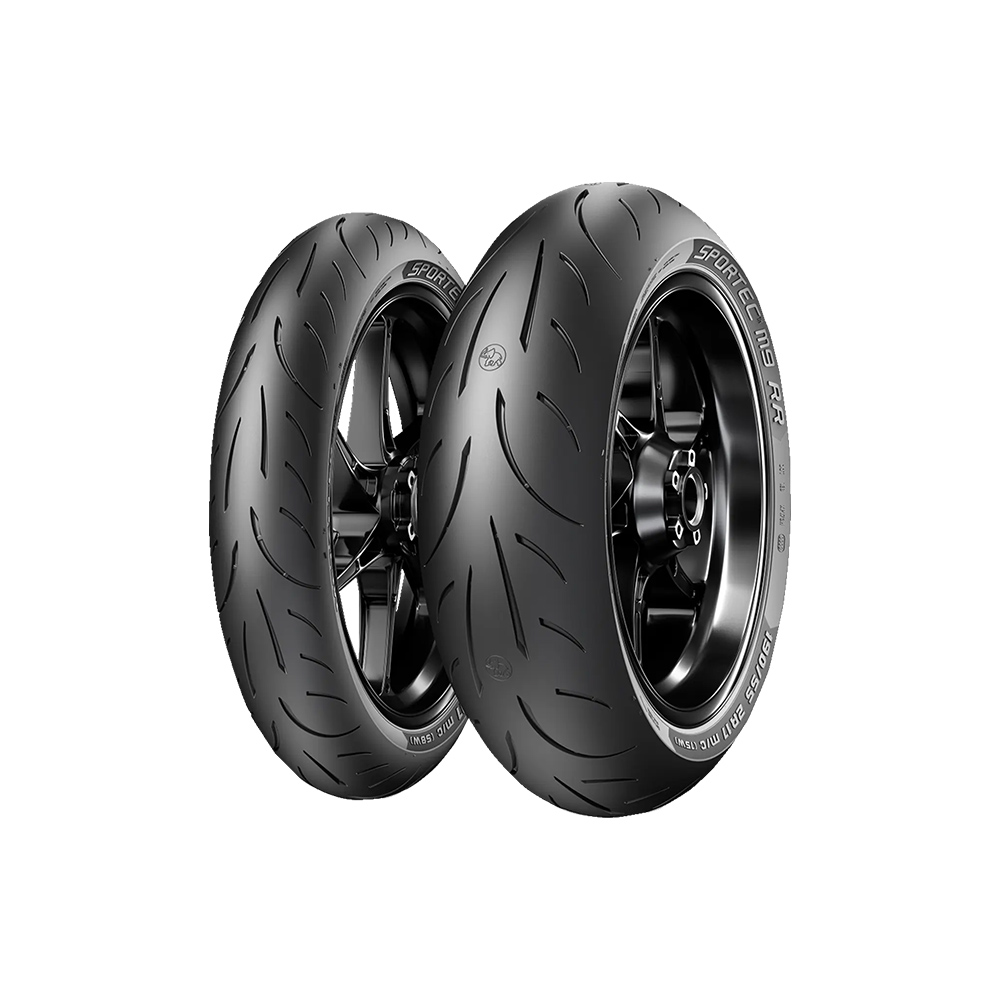
Metzeler Sporttec M9 RR – The Corner Hunter
The Metzeler Sportec M9 RR is your grip guarantee for maximum attack on the road. Lightning-fast warm-up, razor-sharp turn-in, and brutal hold at lean angles – exactly the tire that turns your Supermoto into a cornering weapon. Mount it, rip it, grin.
Continental ContiAttack SM 2 – The Grip That Gets You Hooked.
With the Continental ContiAttack SM 2, you combine maximum bite out of corners, brutal grip at lean angles, and full control during hard braking. More mileage, more feedback, more adrenaline. Mount it, warm it up – and the road is yours.
Michelin Power 5 – Sporty All-Rounder.
With the Michelin Power 5, you make the perfect choice for your Supermoto. Maximum control, excellent grip, and a sporty riding feel in all weather conditions.
Michelin Power 6 – Feel the Power. Live the Curve.
With the Michelin Power 6, you’ll experience pure adrenaline on your Supermoto. Extremely strong grip, precise handling, and full control – whether on the road or the racetrack. For riders who don’t just ride, but want to feel every curve.
Overview:
Front Wheel (Standard Size):
- 3.50×17 inches – with 120/70-17 tires
Rear Wheel (Common Sizes):
- 4.50×17 → with 150/60-17 tires – lighter, more agile
- 5.00×17 → with 160/60-17 tires – more grip, higher stability
Our Experience:
If there’s limited space in the swingarm and a 160/60-17 combination is desired, we recommend Michelin tires, as they are slightly narrower by design.
What does „Ruckdämpfung“ or Cushdrive mean?
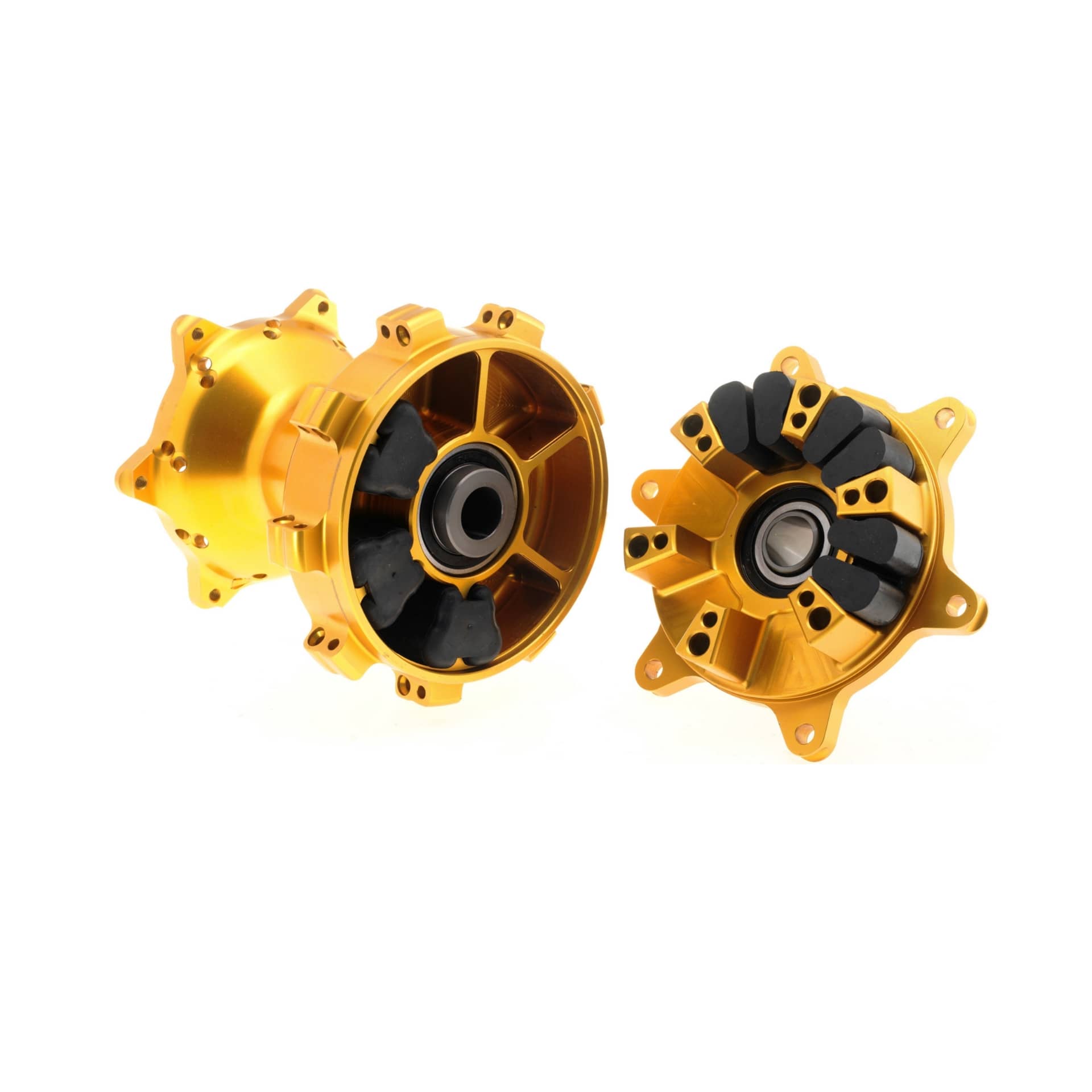
A cushdrive protects the entire drivetrain – meaning the transmission, clutch, and engine.
Why?
During load changes – e.g., strong acceleration or abrupt throttle release – high torque peaks occur. On the road with grippy supermoto tires, this energy cannot be „damped away“ as it would in off-road conditions. The tires offer extremely high grip, so all the force is immediately transferred to the drivetrain.
In classic enduro use, the soft ground together with knobby tires provides natural damping. However, this is lost when converting to a supermoto.
Especially for high-performance models, we therefore recommend using a cush-driven rear hub.
This is the essential difference:
- with damping: Fewer load peaks → Protection for transmission & engine → Noticeably more riding comfort → More traction, especially in corners
- without damping: More direct response → More control → Ideal for stunts (e.g., wheelies)
Our assessment:
- More corners, more road, fewer stunts? → Order rims with cushdrive directly.
- More wheelies and show than pure corner chasing? → A conventional hub is perfectly sufficient here.
What does a tubeless system mean?
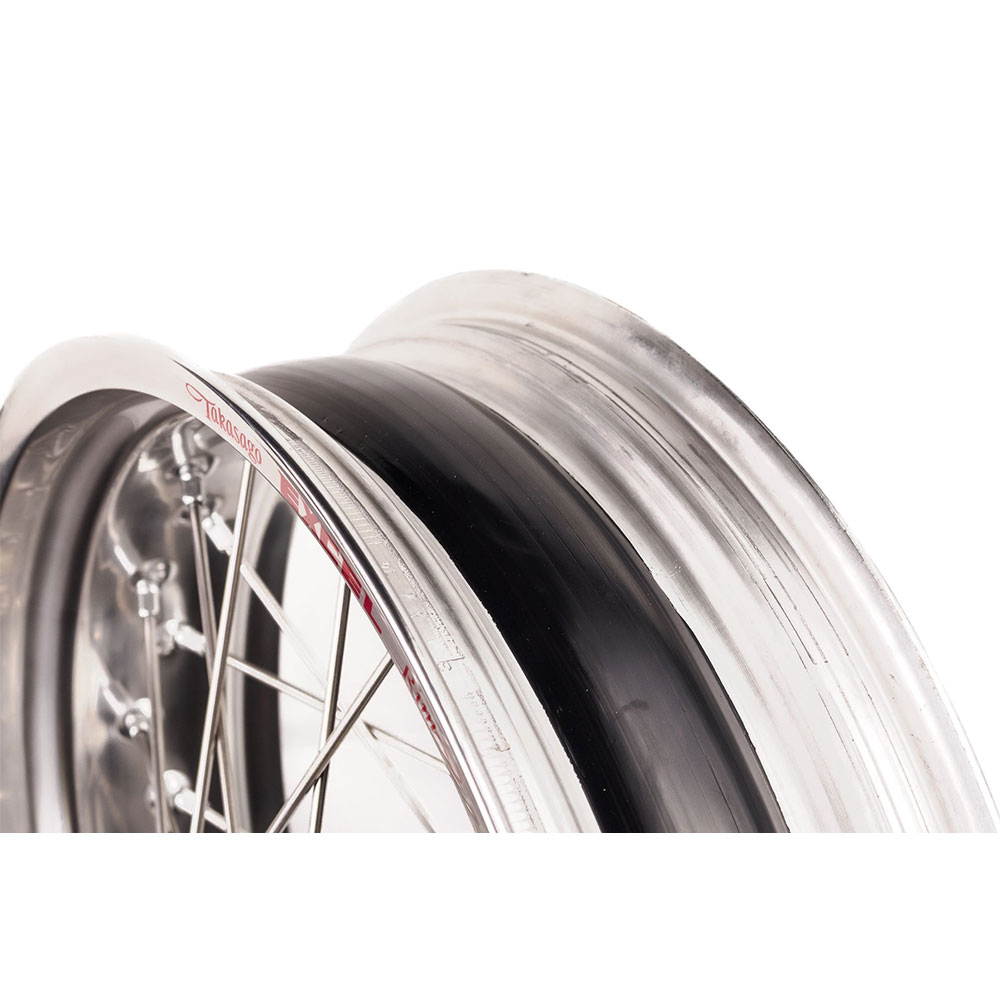
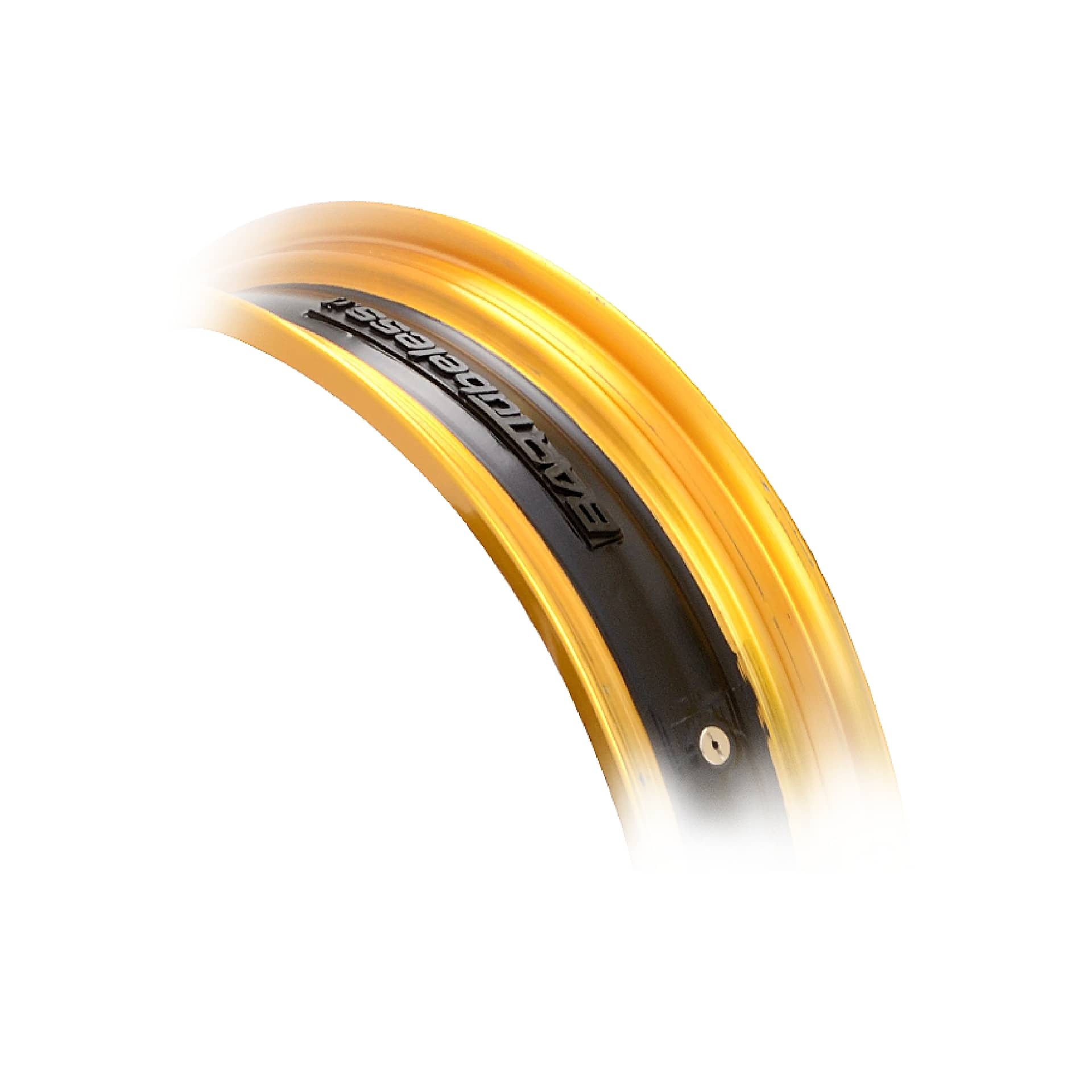
With a tubeless system, you can ride your Supermoto rims without an inner tube.
The rim is converted to be airtight. Then, a fixed valve is inserted into the rim. Air thus goes directly into the tire – an inner tube is no longer needed.
If there is minor damage, e.g., from a nail, the tire can be quickly repaired from the outside with a suitable puncture repair kit for tubeless tires, without removing the tire from the rim – a big advantage!
Additionally, tire pressure is distributed more evenly, leading to more stable and better handling. That’s why we recommend tubeless.
This is the essential difference:
- with Tubeless: Better performance in handling → Repairable from the outside → Higher price and more effort with leaks in the system
- without Tubeless: Cheaper and easier to handle → Easier to mount yourself → More heat development and higher risk of punctures
Our assessment:
For most Supermoto riders, an inner tube is absolutely sufficient – especially if you mount rims and tires yourself.
In any case, make sure you have good rim tape so that the inner tube is not damaged by the spoke nipples.
What’s the difference between a conventional wheel hub and an Excel G2 wheel hub?
Here, we’d like to explain the difference between an Excel G2 wheel hub and a conventional wheel hub – for example, from Haan Wheels. Especially if you’re interested in Supermoto rims, you’ll encounter this question more often.
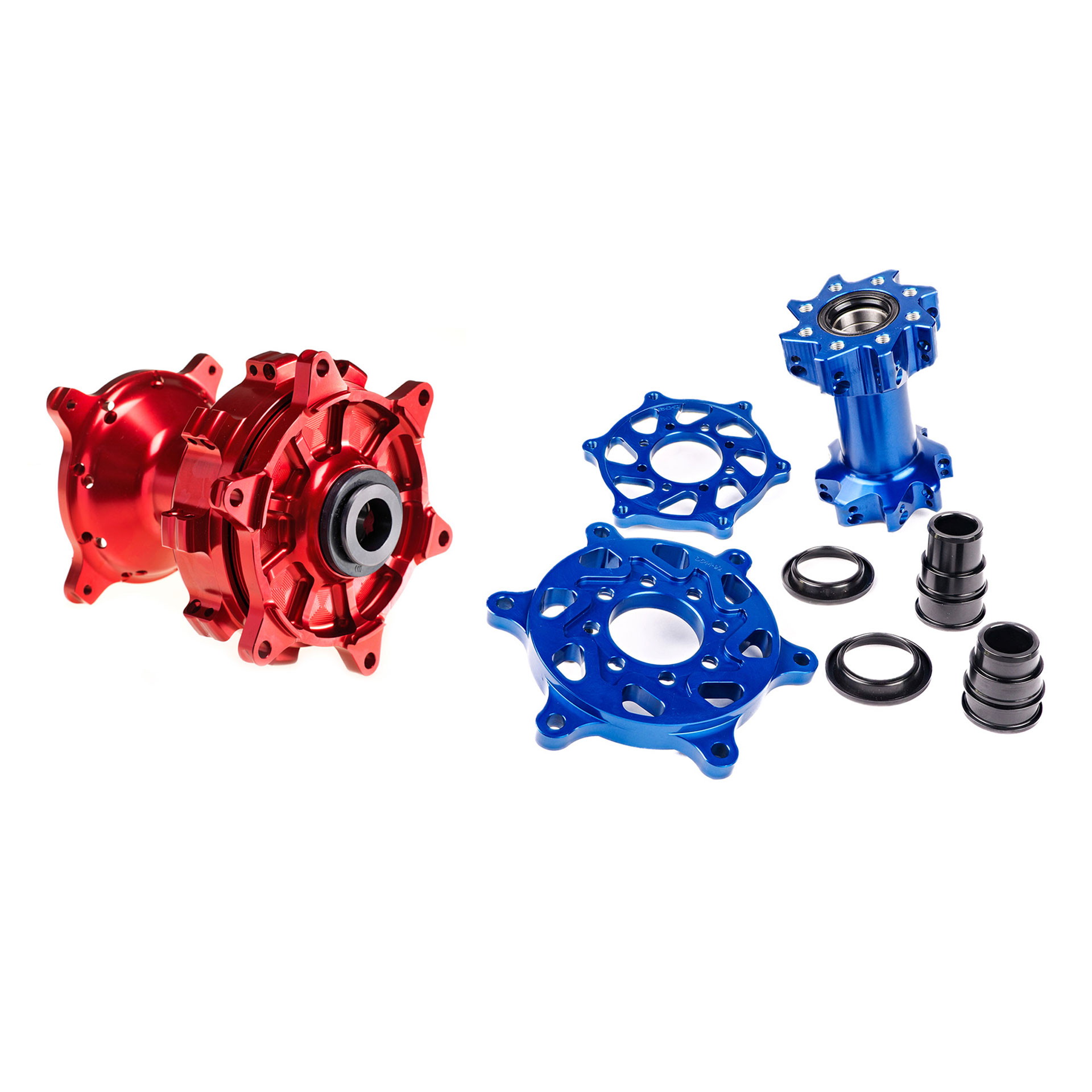
The Excel G2 wheel hub is usually more affordable than classic, billet-machined wheel hubs. The reason for this lies in the modular principle used by the manufacturer. The wheel hub is made from several standardized components and then assembled.
Example rear wheel hub:
The Excel G2 rear wheel hub consists of three separate components:
- Wheel hub center piece
- Brake disc adapter
- Sprocket adapter
These individual parts are screwed, glued, and pressed together before shipping, creating a stable unit.
In contrast, a conventional wheel hub is milled from a single piece of aluminum – meaning it has a monolithic structure.
This is the essential difference:
- Excel G2: modular construction → more efficient in production → lower price
- Conventional wheel hub: milled from one piece → more complex → higher price
In terms of quality, the Excel G2 wheel hub is on the same level as other high-quality wheel hubs.
Important note:
The Excel G2 wheel hub is not offered with the „cushioning“ or „Cush-Drive“ option. So, if you’re looking for a wheel hub with Cush-Drive, it’s not an option.
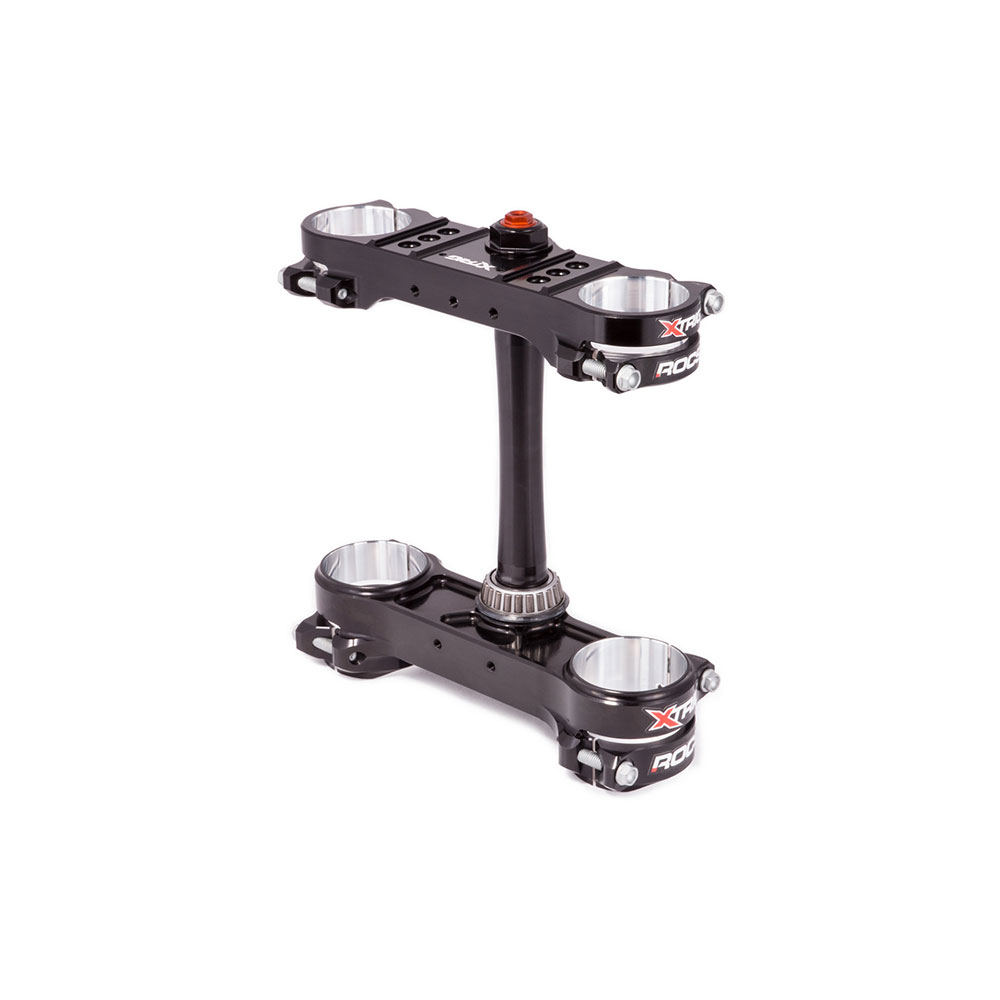
Do I urgently need a Supermoto triple clamp?
When converting to Supermoto, the wheel diameter is reduced compared to the original enduro wheels. This increases the wheelbase and makes the motorcycle less agile in steering. The front is harder to turn in and the front wheel loses grip faster in corners.
A specially tuned Supermoto triple clamp specifically counteracts these effects.
These are the advantages:
- More control & grip on the front wheel → The front works more directly, provides more feedback and the front wheel remains more stable when leaning. Cornering becomes significantly more precise and safer.
- Fork works without tension → Due to the special clamping of the Xtrig Rocs Supermoto triple clamp, the fork works more evenly – this improves damping and increases the lifespan of the fork.
- More space at the front wheel → Due to the greater width of the triple clamp, the tires no longer rub against the fork protectors.
Our assessment:
We say yes to the Supermoto triple clamp. Perfect for making your bike super agile instead of „just converted“.
Expert opinion
Can your rims be registered?
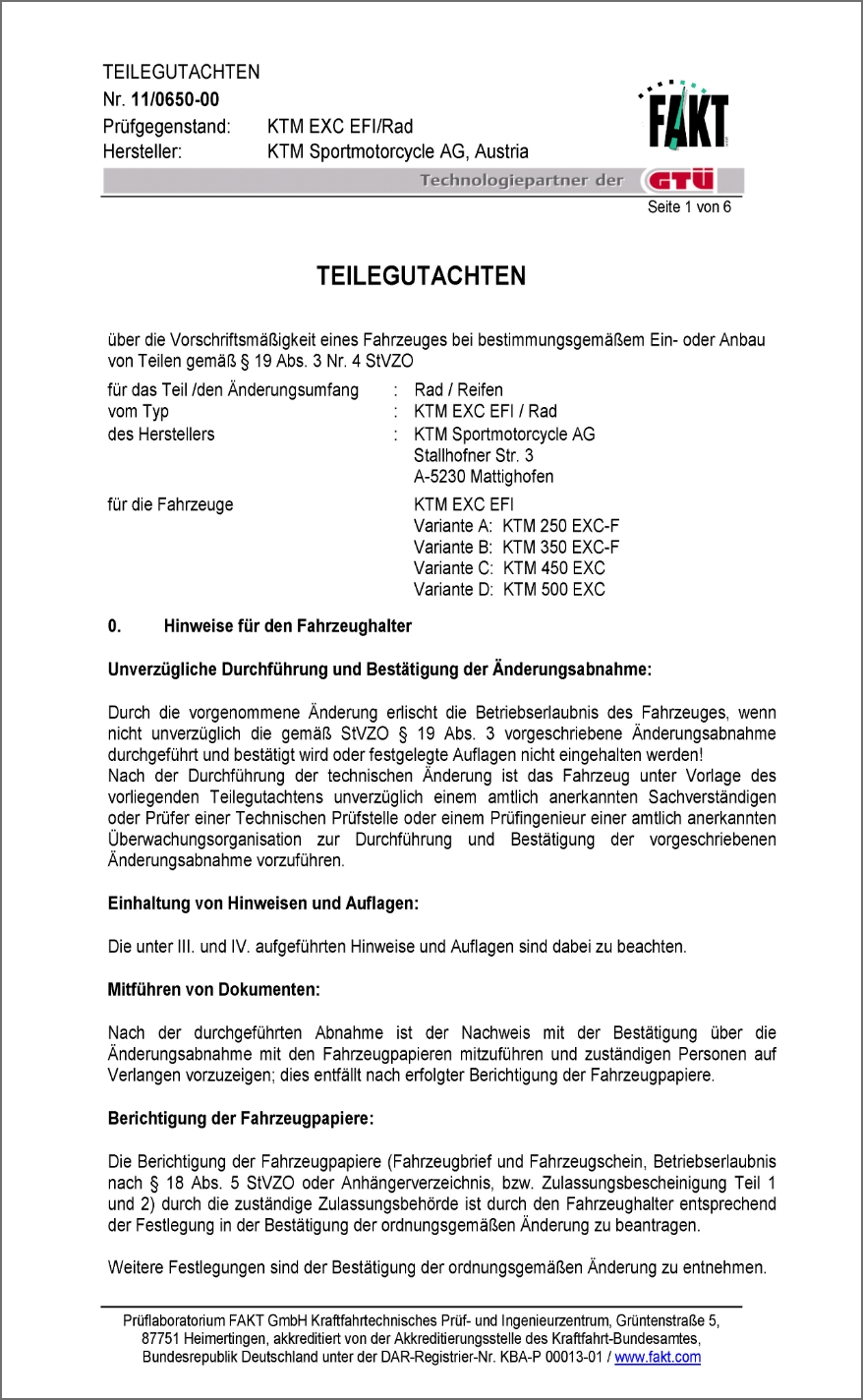
The question of all questions. Yes, that’s possible. All Supermoto rims in the shop with an Excel rim can be registered. Either via the parts certificate available for download here or via individual approval.
The certificate fundamentally refers to vehicles of the KTM group. If you have a Husqvarna or a Gas Gas, this certificate simplifies registration, as the vehicles are identical in construction.
For other manufacturers, such as Beta, we can provide a strength document, which confirms the load capacity of the rims. This document specifies the rim size, vehicle brand, and model.
All Supermoto rims with an Excel rim are provided with DOT numbers, based on which the inspection body can carry out a registration.
Please inquire on site at an inspection body what documents you need and what costs will be incurred for the respective registration.
The question often arises why there is no certificate for every vehicle brand or model. Simple answer. We have made intensive efforts, but the creation of a complete testing procedure with a subsequent certificate, for example for the Beta brand, would cost between €60,000 and €90,000. An effort we cannot bear.
We ask for your understanding and do everything we can to make the registration of your rims as uncomplicated as possible for you.